
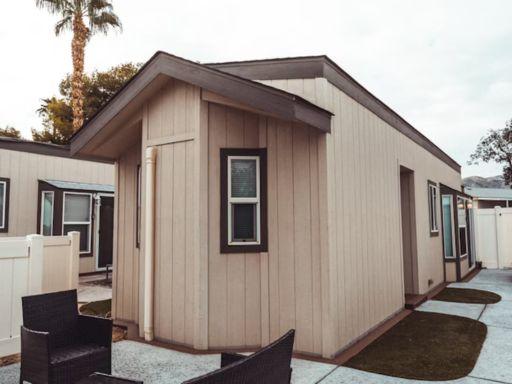
The tiny house movement is still increasing, fueled by people's yearning for more independence, a more sustainable way of living, and a simpler life. As we look ahead, the debate is more and more shaped by the forward-looking predictions of experienced professionals. These tiny house experts are seeing an interesting change from simple living to smarter, more personalized, and more durable homes. The trends they envision for 2025 show that the movement is growing up, combining new technologies with a renewed focus on community and self-sufficiency. This new wave isn't only about having less; it's also about living better, with more purpose and connection to the world around us.
The Growth of Smart and Connected Micro-Technology
One of the most important trends that tiny house specialists have noticed is how easy it is to use smart home technology in small areas. The hard part has always been adding modern comforts without losing valuable space. Micro-technology is the answer for 2025. These are appliances and systems that are not only smaller, but also smarter and can do more than one thing. Picture one wall unit that controls the temperature, cleans the air, and plays music and movies. Voice-activated lighting and storage, together with heating and cooling systems that are very efficient and can be managed by apps, will become the norm. These technologies aren't just about luxury; they're about making things work better, saving energy, and making the home more responsive and intuitive, which gives the homeowner more time and mental space.
How are homes becoming more independent?
The small house movement is moving toward more self-sufficiency because people want to be strong and independent. People think that the best tiny home in 2025 will be one that uses no energy or perhaps produces more energy than it uses. This is more than just solar panels. Experts in tiny houses say that there will be a lot more integrated systems that include sophisticated rainwater harvesting with built-in filtration, composting toilets that are more attractive and efficient, and small-scale biogas converters that turn organic waste into fuel. Also, more and more people are interested in attached greenhouse systems or vertical hydroponic gardens that let them grow a lot of their own food all year round. This movement turns the tiny house from a basic place to live into a personal ecosystem, protecting owners from changes in utility prices and helping them live a more sustainable existence.
Are customizable kits the answer to making things easier to use?
The high expense and difficulty of a custom build have kept many people who want to buy a home from doing so. This is where the trend of advanced tiny home frame kits comes in. The market for these kits is changing a lot. Providers are moving away from basic shells and toward solutions that are more adaptable and complete. These modern small home frame kits usually come with full instructions, pre-cut materials, and choices for different types of walls, roofs, and insulation. This method lets anyone with some DIY abilities build their own home, which cuts down on labor costs and lets them make it their own. The expansion in this field is a direct result of the need for a simpler way to buy a tiny home, which makes the dream possible for a wider range of people.
What does it look like when people start living in communities and with people from different generations?
The picture of one person or a couple living alone in a little house on wheels is getting bigger. In 2025, a big trend will be making tiny dwellings that can be lived in by people of all ages and building tiny house communities. We are seeing ideas for clustered small homes on a single property, sometimes joined by a communal courtyard or shared space, instead of one 400-square-foot unit. These floor plans let large families live close to each other while still having their own space and solitude. At the same time, planned tiny house towns are becoming more popular. These communities have shared resources like guest rooms, workshops, and big gardens, which help people feel connected and assist each other. This trend helps people who are lonely and gives those who want to stay at home or families who want to live together a good way to do so.
The Focus on Natural and Locally Sourced Materials
Sustainability means going beyond just using less energy and into the materials that make up the house. More and more people want buildings that are not only easy to run, but also good for their health and the environment. Because of this, people are using more natural, local, and non-toxic materials again. More compact homes will have reclaimed wood, cork insulation, clay plaster walls, and roofing built of recycled materials. Tiny house experts that believe in a comprehensive view of sustainability strongly encourage this movement. Using materials from the area cuts down on the carbon impact of shipping, helps the local economy, and makes a home with a unique, real character that tells a narrative.
Conclusion
The tiny house trend is always changing. Tiny house specialists said that the trends they see for 2025 show that the movement is getting older and spreading out. Living in a little space will be smart in the future, with technology making it more comfortable and efficient. It is strong and helps people become independent in terms of diet and energy. Thanks to better small home frame kits and construct models, it is now easier to get. And maybe most crucially, it's connected and shared, which changes how we think about family and community. These changes suggest that the movement's essential values of intentionality, sustainability, and freedom are getting stronger and more important, which will keep it relevant and interesting for a long time.