
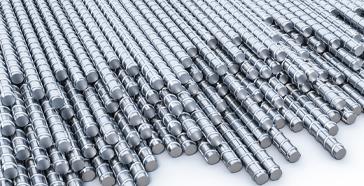
TMT (Thermo-Mechanically Treated) bars have become a go-to reinforcement material across modern construction, and their role in precast and modular construction is especially significant. Precast and modular methods demand repeatable quality, speed, and precise structural performance — characteristics where TMT bars excel. This article explores the key benefits of using TMT bars in these systems and the practical considerations contractors, designers, and manufacturers should keep in mind.
Why TMT bars suit precast & modular systems
Precast and modular construction rely on factory-controlled processes, tight tolerances, and repeatable connections between elements. TMT bars are manufactured to deliver a consistent combination of high yield strength, ductility, and bonded ribs — properties that align well with the needs of offsite production:
-
High strength and ductility: TMT bars commonly come in grades such as Fe 415, Fe 500 and higher. Their higher yield strength lets designers use smaller bar sections without sacrificing capacity. Crucially, TMT bars also maintain ductility, which helps precast elements absorb forces (including dynamic loads during transport and erection) without brittle failure.
-
Consistent bonding characteristics: The controlled rib patterns and surface profile of TMT bars provide predictable bonding with concrete. For precast elements that depend on reproducible transfer of stresses (e.g., beams, slabs, columns, and wall panels), consistent bond ensures quality and reduces rework.
-
Better weldability and bending behaviour: Compared with many untreated steels, modern TMT bars are manufactured to tolerate cold bending and site adjustments while retaining strength. This is useful for modular units where bespoke connection details or minor adjustments are often needed.
-
Reduced on-site labour and faster assembly: Because precast components are reinforced and finished in the factory, using TMT bars helps ensure that the structural quality delivered to site is uniform. This speeds assembly and reduces corrective work at the jobsite.
Practical benefits for the supply chain and quality control
Precast factories benefit from lower scrap rates and predictable supply when using standardized TMT grades. Mill certificates and batch traceability allow quality control teams to confirm compliance before casting, reducing the risk of failed tests later. Additionally, the improved strength-to-weight ratio of TMT bars can reduce shipping costs per usable ton of reinforcement when optimized design is applied.
Key considerations before specifying TMT bars
While TMT bars are highly suitable, several practical and design considerations must be addressed for successful use in precast and modular projects:
-
Grade selection and compatibility: Choose TMT grades that match structural requirements and connection detailing. For seismic regions or heavy-load units choose higher ductility and appropriate yield strength — but ensure the grade works with specified welding, lap lengths and anchorage details.
-
Manufacturing tolerances and bend schedules: Precast plants use detailed bending schedules and automated benders. Confirm that the TMT supplier’s allowed bend diameters and cold-bend recommendations match the plant’s equipment and the project’s reinforcement detailing.
-
Surface condition and storage: TMT bars should be stored clean and dry in the factory to avoid rusting that can affect bond and appearance. For exposed architectural precast units, surface finish of the concrete and rusty reinforcement can both be problematic—use protective storage and timely casting.
-
Quality documentation: Require mill test certificates and batch traceability for every delivery. Implement incoming inspection routines (visual checks, dimensions, and sample mechanical tests) so that nonconforming lots do not make it into production.
-
Transportation and handling stresses: Precast elements are subject to lifting, transport, and erection loads. Design reinforcement detailing to manage those loads — e.g., use adequate anchorage, temporary bracing, and lifting inserts sized for both production and handling phases.
-
Connection detailing between modules: Modular construction relies on reliable connections. When using TMT bars for dowels, couplers or embedded plates, ensure the reinforcement layout accommodates the connection type and maintains cover requirements for durability.
Best practices
-
Integrate the TMT supplier early in the design stage for advice on grades, bend radii, and supply logistics.
-
Use standardized bar schedules and prototype testing for critical connections.
-
Keep clear records (batch numbers, mill certificates, inspection reports) for traceability and claims handling.
-
Where corrosion risk is high, consider coated bars or additional concrete cover, and follow durability standards.
Conclusion
TMT bars are an excellent choice for precast and modular construction when combined with rigorous quality control and thoughtful detailing. Their strength, ductility, and predictable bond behavior support the factory-like precision these construction methods demand, while their availability and traceability simplify supply-chain management. By selecting the right grades, enforcing incoming inspection, and coordinating reinforcement detailing with connection design, teams can maximize the performance, speed, and cost-efficiency of precast and modular projects.