
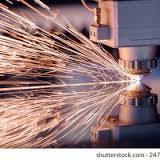
Manufacturing is evolving faster than ever before, driven by advancements in technology, automation, and global demand for high-quality products. At the heart of this evolution lies CNC (Computer Numerical Control) machining, a process that has revolutionized precision manufacturing across industries.
CNC machining enables manufacturers to create parts with unmatched accuracy, repeatability, and efficiency, making it essential in sectors such as aerospace, automotive, medical devices, and consumer electronics. As we look toward the future, CNC machining is set to become even more powerful, integrating with Industry 4.0, artificial intelligence, and sustainable practices.
The Role of CNC Machining in Modern Manufacturing
CNC machining has become the backbone of precision manufacturing because it offers:
-
High Accuracy: Achieving tolerances as tight as ±0.001 inches.
-
Repeatability: Consistent results even in high-volume production.
-
Material Flexibility: Capable of machining metals, plastics, and composites.
-
Versatility: Supports milling, turning, drilling, and multi-axis operations.
-
Reduced Human Error: Automation minimizes manual mistakes.
These capabilities make CNC machining indispensable in industries where safety, reliability, and performance are critical.
Key Advancements Shaping the Future of CNC Machining
1. Multi-Axis Machining
Traditional 3-axis machines are being replaced with 5-axis and even 7-axis CNC machines. These allow manufacturers to machine complex geometries in fewer setups, improving accuracy and efficiency.
2. Automation and Robotics
Robotic arms integrated with CNC systems enable lights-out manufacturing, where machines operate 24/7 without human intervention. This boosts productivity and reduces costs.
3. Artificial Intelligence (AI) and Machine Learning
AI-powered CNC systems can predict tool wear, optimize cutting parameters in real time, and detect defects early. This reduces downtime and ensures higher quality.
4. Hybrid Manufacturing
Combining CNC machining with additive manufacturing (3D printing) provides unmatched flexibility. Manufacturers can 3D print complex shapes and finish them with CNC machining for precision.
5. Digital Twin Technology
A digital twin creates a virtual replica of the CNC machine and the part being produced. This allows simulation, testing, and optimization before actual production, reducing waste and errors.
CNC Machining and Industry 4.0
The future of precision manufacturing is deeply connected to Industry 4.0, the era of smart factories. CNC machining plays a major role by:
-
IoT Connectivity: Machines connected through sensors provide real-time data on performance, maintenance, and efficiency.
-
Smart Analytics: Data-driven insights help optimize machining processes and reduce downtime.
-
Cloud-Based Manufacturing: CNC programs and production data can be stored and shared across global facilities for seamless operations.
By combining CNC machining with digital technologies, manufacturers can achieve higher productivity, lower costs, and better quality control.
Benefits of CNC Machining in Future Manufacturing
1. Unparalleled Precision
With advancing technology, tolerances will become even tighter, supporting industries like aerospace and medical that require micro-level accuracy.
2. Faster Production Cycles
Automation and AI will reduce setup times and machining errors, leading to shorter lead times.
3. Sustainable Manufacturing
Recycling chips, reducing energy consumption, and using eco-friendly coolants will make CNC machining greener.
4. Cost Efficiency
While high-tech machines require investment, reduced labor, minimal waste, and faster production will lower overall costs.
5. Global Scalability
Digital connectivity allows manufacturers to operate CNC facilities worldwide with consistent results.
CNC Machining Across Key Industries
Aerospace
Future aircraft and spacecraft demand lightweight, durable, and precise parts. CNC machining will continue to provide components like turbine blades, housings, and structural parts with extreme accuracy.
Automotive
From electric vehicles (EVs) to autonomous cars, CNC machining supports innovations in engines, transmissions, battery systems, and lightweight body components.
Medical Devices
Surgical tools, implants, and prosthetics require flawless precision. CNC machining ensures biocompatibility and reliability.
Electronics
As devices become smaller and more complex, CNC machining will help produce miniaturized housings, heat sinks, and connectors.
Defense and Energy
Critical parts for defense systems, nuclear plants, and renewable energy equipment rely heavily on CNC machining for safety and durability.
Challenges and Opportunities Ahead
Challenges
-
High initial investment in advanced CNC machines.
-
Skilled labor shortage for operating and maintaining CNC systems.
-
Managing cybersecurity risks with connected smart factories.
Opportunities
-
AI and robotics reducing reliance on manual labor.
-
Increased demand for lightweight, precision components in EVs and aerospace.
-
Global adoption of sustainable CNC machining practices.
The Future Vision of CNC Machining
The future of CNC machining is smarter, faster, and greener. With AI-driven decision-making, cloud-based integration, and hybrid manufacturing, CNC will evolve from a precision tool to a fully automated production ecosystem. Manufacturers who adopt these innovations will benefit from:
-
Higher productivity
-
Greater design freedom
-
Lower environmental impact
-
Stronger global competitiveness
Conclusion
CNC machining has already transformed precision manufacturing, but its future promises even greater advancements. By integrating AI, robotics, digital twins, and Industry 4.0 technologies, CNC machining will set new standards in accuracy, efficiency, and sustainability.
For industries where precision is mission-critical, CNC machining is not just the present—it is the future of global manufacturing innovation.